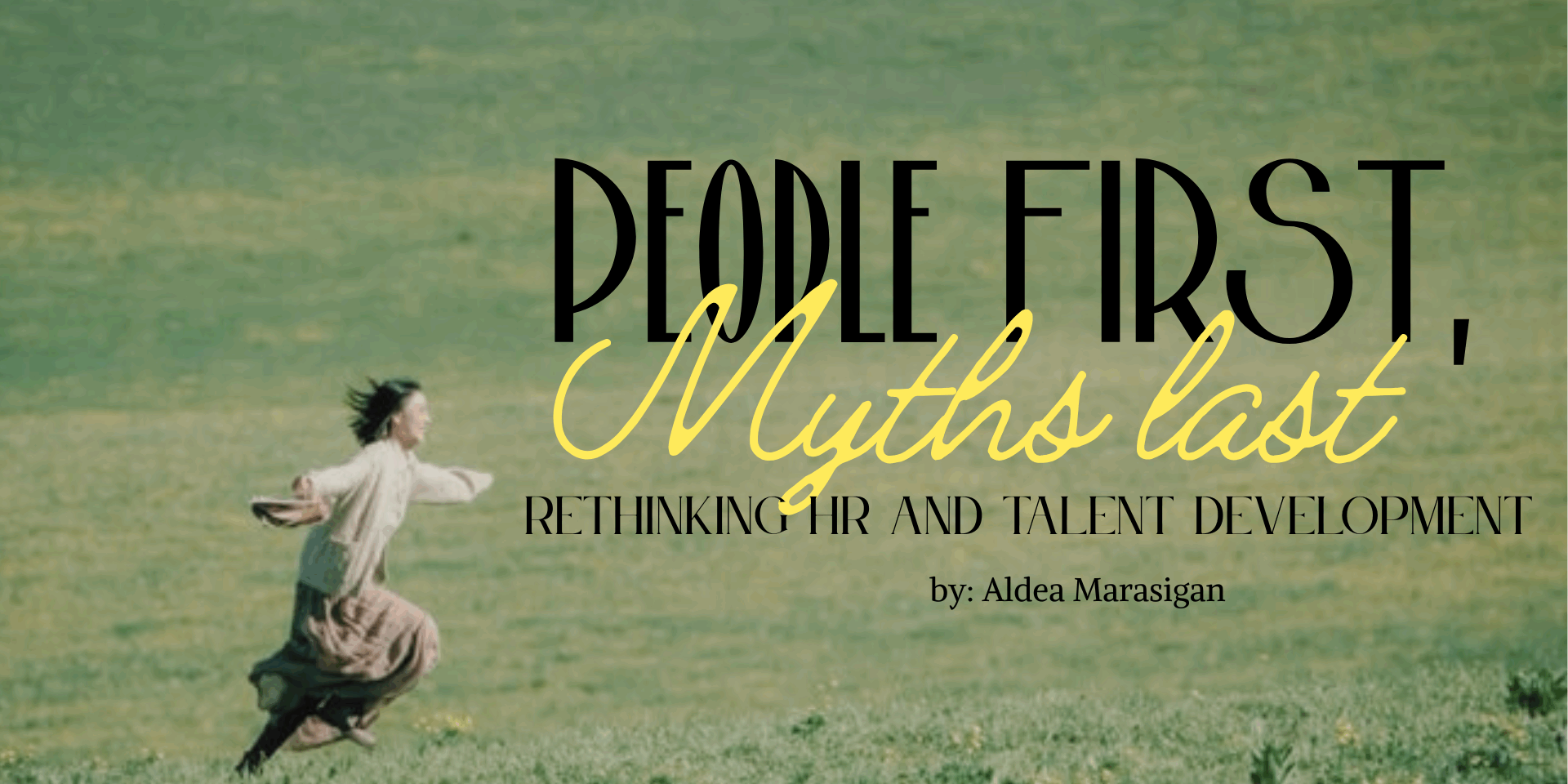
Let’s be real: the phrases “HR” and “Talent Development” don’t exactly make people jump up for joy at mention. To many, these roles continue to bring to mind cliche images of bureaucratic policy thugs, forms, and year-end seminars that employees have forgotten by the end of the week. But in the high-speed, hybrid-model environment of today, where upskilling is happening overnight and engagement is mission-critical, this couldn’t be further from the case.
In practice, HR and Talent Development are the unheralded change drivers. They influence culture, enable the workforce, and future-proof organizations from the inside out. But if leaders, employees, and even HR practitioners themselves persist in working on the basis of outdated assumptions, we risk missing out on their full strategic value.
So, let’s clear the air. Here are five of the most common myths, three about Talent Development and two about HR, that continue to hold teams back.

Myth 1: Talent Development Is Only For Top Performers
One of the most destructive presumptions in any organization is that talent development should be saved for “high-potential” or potential future executives. Although succession planning is critical, it’s inaccurate to consider talent development something separate.
The reality is, everybody must have the chance to grow. It could be a frontliner, a fresh graduate, or a long-term contributor who wishes to revamp their role. Development drives engagement, retention, and performance across the board. When organizations invest in a small minority, they open themselves to creating elitism, bitterness, and a skill gap in the larger workforce.
The most intelligent companies give every employee a customized growth plan, one that aligns with his or her strengths, goals, and the changing needs of the business.

Myth 2: Training Equals Development
It’s easy to check a box after shipping a person off to a conference or webinar and label it “development”. But actual development moves much farther than structured training events. While training is certainly useful, it is merely one aspect of talent development.
Real development is not static. It occurs through stretch responsibilities, coaching, feedback loops, problem-solving in real time, and mentoring. Employees learn through action, not observation. If we only trust classroom learning without backstopping it with reinforcement, application, and reflection, we’re just accumulating certificates, not establishing capabilities.
Successful talent strategies infuse development into work, promote ongoing learning, and use feedback as fuel.

Myth 3: Talent Development Has To Cost A Fortune
Another common myth is that significant development needs a large budget, corporate retreats, or access to high-end courses. But in reality, some of the most impactful development experiences cost little to nothing.
Consider job shadowing, peer mentoring, cross-training, knowledge sharing sessions, or even prompting reflection after projects. These can make meaningful learning moments without blowing your budget. Too often, what they need most isn’t a course, it’s a challenge, a coach, or an opportunity to experiment.
The difference is being intentional. Infuse learning into the culture, and consider that talent development is not a one-time line item; it’s a mindset.

Myth 4: HR Only Deals With Hiring And Firing
This myth may be the most enduring one, and also the most false. Although HR used to deal with recruitment, payroll, and firings, the role has morphed into a strategic influencer of business success.
Contemporary HR is actively engaged in organizational design, workforce planning, cultural change, diversity and inclusion, and employee engagement. HR leaders occupy the executive table, not to control compliance but to drive decisions that affect productivity, innovation, and resilience.
If the HR in your organization is still seen as purely administrative, it’s time for a change. When enabled, HR can be a growth catalyst, not a process owner.
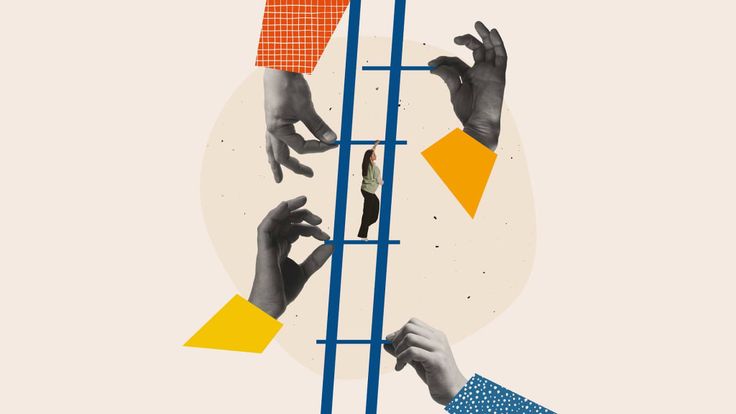
Myth 5: HR Only Defends The Company, Not The Employee
This half-truth is the source of this myth: HR has to defend the business, sure, but it should be protecting its people too. The perception that HR is a corporate watchdog keeps employees from seeing it as a resource that can be supportive to them and overlooks the true value HR can bring.
In real life, good HR reconciles business objectives with employee experience. It strives to design equitable systems, mediate disagreements with compassion, and make sure policies are lawfully compliant and human-focused. When trust is established in HR, workers feel psychologically secure, and more engaged in their job.
HR does not have to be an entity to be feared, but rather a collaborator in triumph.
It’s Time to Rethink What HR and Talent Development Really Mean
These five myths don’t just reflect misconceptions, they quietly influence how businesses invest in their employees and employees think about their own development. When HR is only about compliance and talent development is viewed as an extravagance for a few, we shortchange everyone’s potential to grow.
But here’s the reality: the businesses that will shape the future are the ones that are investing in their people now. They see HR as a strategic business partner, not as an administrative function team. They believe that each and every one of their employees, no matter what their title or tenure, needs the opportunity to learn, grow, and add value.
By shattering these myths, we clear space for human, more strategic, and more future-proof ways of working. We build cultures where growth isn’t a tickbox, but a mindset. Where HR supports the business, not just enables it.
Want to bust myths in your workplace too?
Whether you’re revolutionizing career paths, infusing development into culture, or revolutionizing your HR strategy, this is your time to shift.
Let’s create a workplace where individuals aren’t controlled, they’re empowered. Let’s make HR and Talent Development the competitive edges that they were designed to be.