In the past few years, many organizations have had to confront a difficult reality: disruption is no longer an exception. It is becoming part of the normal rhythm of doing business.
From rising operational costs and shifting customer demands to ongoing uncertainty in the global and local economy, companies are constantly being pushed to adjust. Even here in the Philippines, leaders are facing tighter margins, changing workforce expectations, and pressure to stay competitive despite constraints.
What stands out in these situations is that resilience is not just about big decisions made at the top. It shows up in the everyday work of managers, supervisors, and teams. It is visible in how problems are solved, how people respond to change, how commitments are fulfilled, and how individuals continue to perform even when things are difficult.
Many organizations discover during a crisis that their biggest challenges are not external. They are internal. Small inefficiencies that used to go unnoticed begin to hurt performance. Delays and unclear coordination start to compound. Teams hesitate or resist when faced with change. Accountability weakens, not because people do not care, but because expectations and ownership are not always clear. Over time, pressure also begins to affect focus, energy, and morale.
These are not failures of strategy. They are gaps in capability.
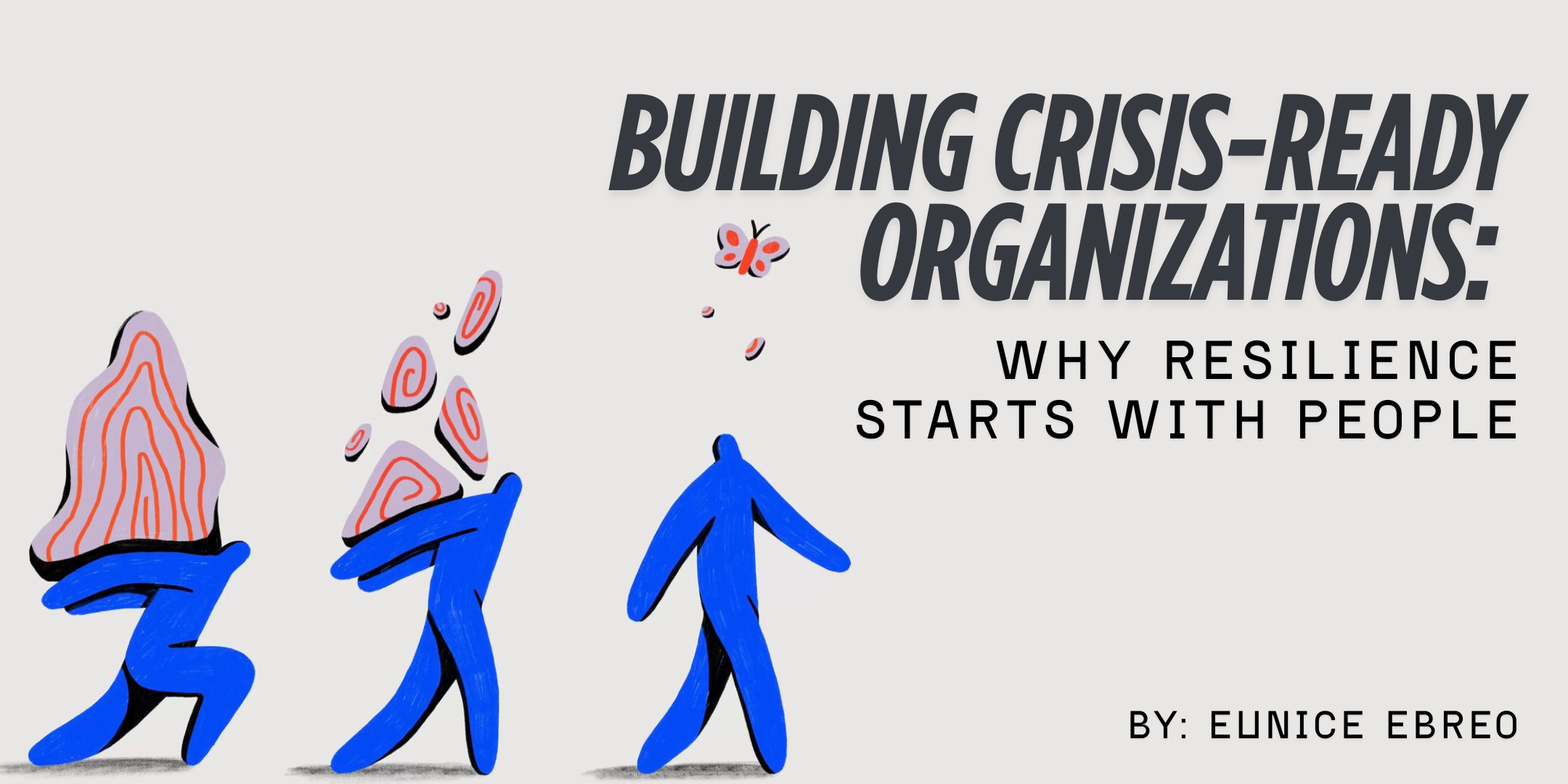
This is where resilience is really built. Not in high-level plans, but in how people think, lead, execute, and sustain themselves under pressure.
Managers play a crucial role. They may not control overall strategy, but they shape how work happens day to day. When conditions become difficult, their ability to spot inefficiencies, guide their teams through change, ensure follow-through, and maintain steadiness becomes even more important. The reality is that organizations do not become resilient by intention alone. They become resilient when their people are equipped to act differently when it matters most.
This is the thinking behind ExeQserve’s new set of programs focused on crisis resilience. Instead of treating resilience as an abstract concept, these programs are designed to build practical capabilities that people can immediately apply in their roles.

How ExeQserve Helps Organizations Build Crisis Resilience
At ExeQserve, we recognize that resilience is not built through theory—it is built through practical, workplace-ready capabilities. That is why we have developed a focused suite of programs designed to equip managers, supervisors, and teams to perform effectively under pressure.
1. Think Better Under Pressure
Practical Cost-Saving and Efficiency Problem Solving for Managers and Supervisors
During a crisis, organizations cannot afford waste, delays, or inefficiencies. Yet many managers are not equipped with a structured way to identify and solve these issues.
This program helps leaders:
- Explain why managers and supervisors play an important role in controlling cost and improving efficiency during difficult business conditions
- Identify common sources of waste, delay, duplication, and inefficiency in day-to-day operations
- Define workplace problems more clearly before rushing to solutions
- Identify key causes and constraints affecting cost and efficiency issues
- Generate practical and workable ideas for reducing waste and improving workflow
- Evaluate options using relevant criteria such as savings potential, feasibility, speed, risk, and impact on operations
- Translate selected ideas into practical action steps and follow-through commitments
Using the 4 Hats of Creative Problem Solving (Explorer, Artist, Judge, Warrior), participants learn how to approach operational challenges with discipline and clarity, especially when pressure is high.

2. Change-Ready Leadership
Leading Rapid Team Adaptation in Times of Uncertainty
Change often fails not because of poor strategy, but because teams struggle to adjust.
This program equips managers to:
- Explain why change agility is now a practical leadership requirement.
- Recognize common emotional and behavioral responses to change in themselves and others.
- Identify leadership behaviors that help teams adapt with greater clarity and confidence.
- Communicate more effectively during uncertainty and transition.
- Respond more constructively to resistance, hesitation, and mixed reactions.
- Identify team practices that support faster adjustment and stronger alignment.
- Create a practical action plan for leading a current change issue in their team.
Instead of abstract leadership theory, this workshop focuses on real, day-to-day leadership actions that help teams move forward.

3. Own It and Deliver
Strengthening Accountability and Execution Discipline Under Pressure
In difficult times, missed deadlines and unclear ownership become more expensive.
This program helps teams:
- Explain accountability as a practical driver of execution reliability
- Identify common causes of missed commitments, delays, and weak follow-through
- Clarify ownership, deliverables, deadlines, and success measures more effectively
- Strengthen handoffs and escalation practices across teams
- Conduct more constructive accountability conversations when follow-through is weak
- Identify team routines that improve execution consistency
- Create a practical action plan to improve accountability and delivery in their area
It reframes accountability from blame to ownership and reliability, enabling teams to deliver even under constraints.

4. Resilient Under Pressure
Sustaining Personal and Team Effectiveness in Uncertain Times
Sustained pressure takes a toll—not just on morale, but on performance.
This program focuses on:
- Explain resilience as a practical workplace capability linked to sustained performance
- Identify personal signs of strain, overload, and reduced recovery
- Recognize team conditions that strengthen or weaken resilience
- Apply practical habits that support steadiness, recovery, and focus under pressure
- Identify leadership behaviors that help teams remain constructive and effective during strain
- Select team routines that improve support, communication, and recovery
- Create a practical resilience action plan for self and team
It shifts resilience from a “wellness topic” to a performance capability that directly impacts results.
What connects all these programs is a simple idea. Resilience is not a single skill. It is a combination of everyday capabilities that allow people to respond, adapt, and keep moving forward when conditions are not ideal.
Organizations that invest in these capabilities are better positioned to navigate uncertainty. They can make clearer decisions under pressure, adjust more quickly to change, execute more consistently, and sustain performance over time.
The question for leaders today is not whether another disruption will come. It is whether their people are ready when they do.
ExeQserve’s programs are built with this reality in mind. They are practical, grounded in real workplace situations, and focused on helping managers and teams perform when it matters most. Because in the end, resilience is not just about surviving a crisis. It is about having the capability to keep delivering, even in the middle of one