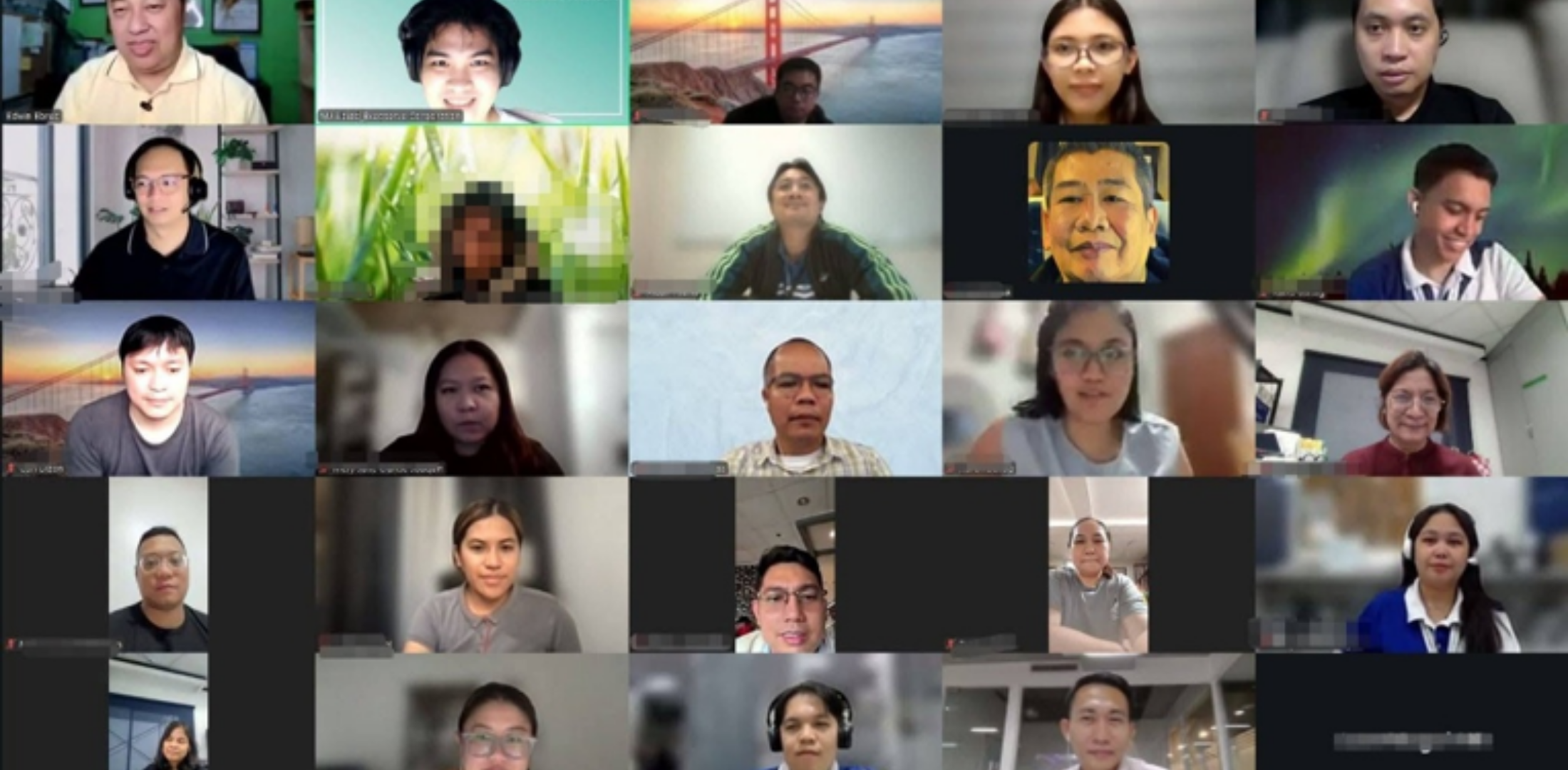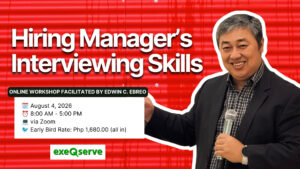

Today’s workplace brings together employees from different generations, each shaped by unique experiences, technologies, communication styles, and expectations about work. These differences can influence how people respond to leadership, receive feedback, handle challenges, and collaborate with others. To help leaders navigate these realities, ExeQserve conducted the online workshop regarding Leadership in a Multigenerational Workplace, facilitated by Mr. Edwin C. Ebreo. The session last June 30, 2026 provided participants with practical approaches for building stronger working relationships across Gen X, Millennials, and Gen Z.
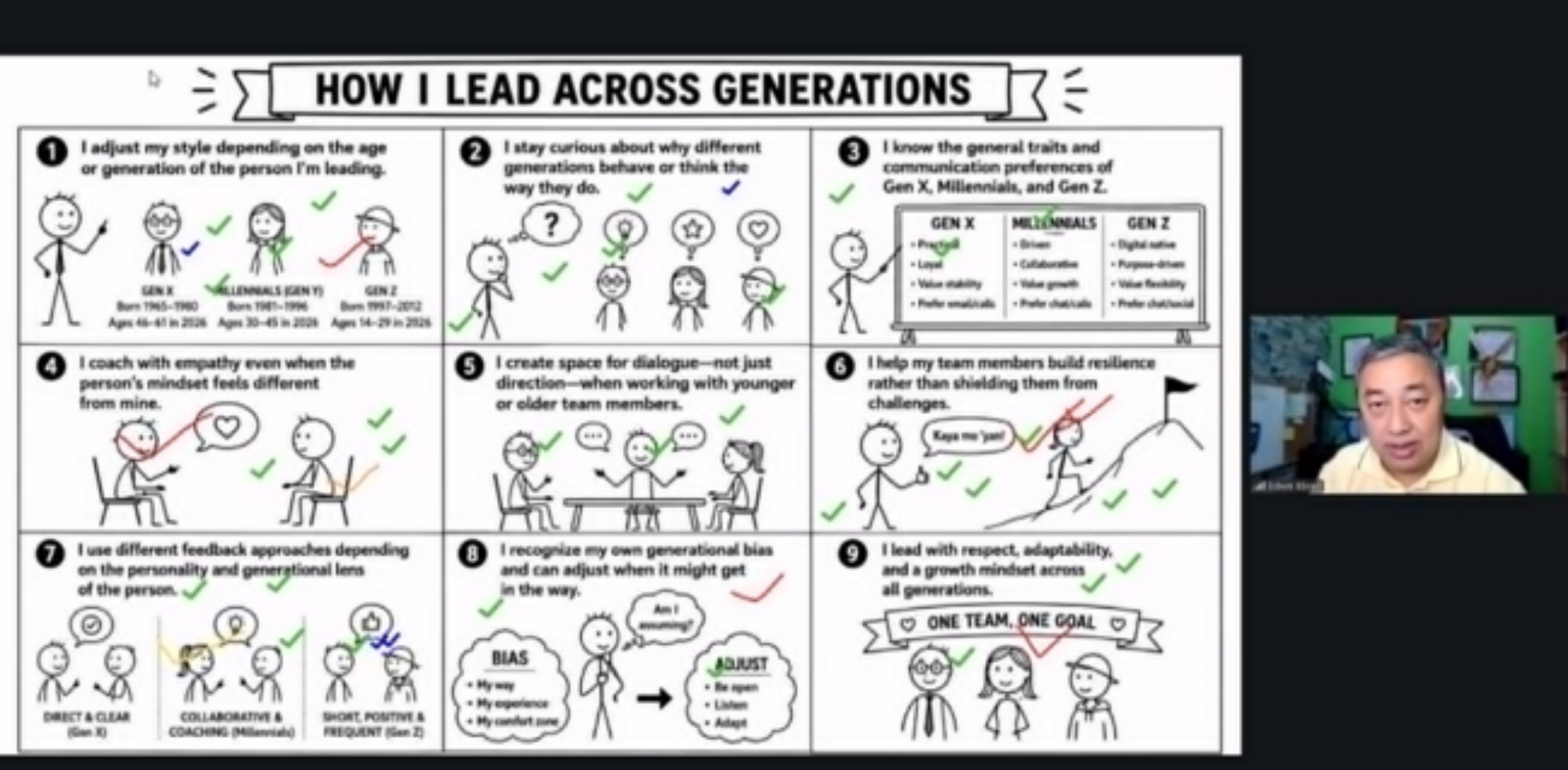
A key message from the workshop was that generational profiles can help leaders understand common patterns, but they should never be used to stereotype employees. People may share certain experiences with others from the same generation, yet each person still has a distinct personality, background, motivation, and way of working. Effective leadership begins with curiosity: asking questions, listening carefully, and taking time to understand the individual behind the generational label. This allows leaders to respond to actual needs rather than assumptions.
The discussion also explored how differences in workplace expectations can become sources of tension. Some employees may value structure, independence, and respect for experience, while others may prefer regular feedback, collaborative decision-making, flexibility, and a clearer connection between their work and its purpose. Differences may also appear in preferred communication channels, views on work-life balance, and expectations for career growth. Instead of treating these preferences as signs of poor attitude or lack of commitment, leaders were encouraged to identify the concern behind the behavior and find ways to bridge the gap.
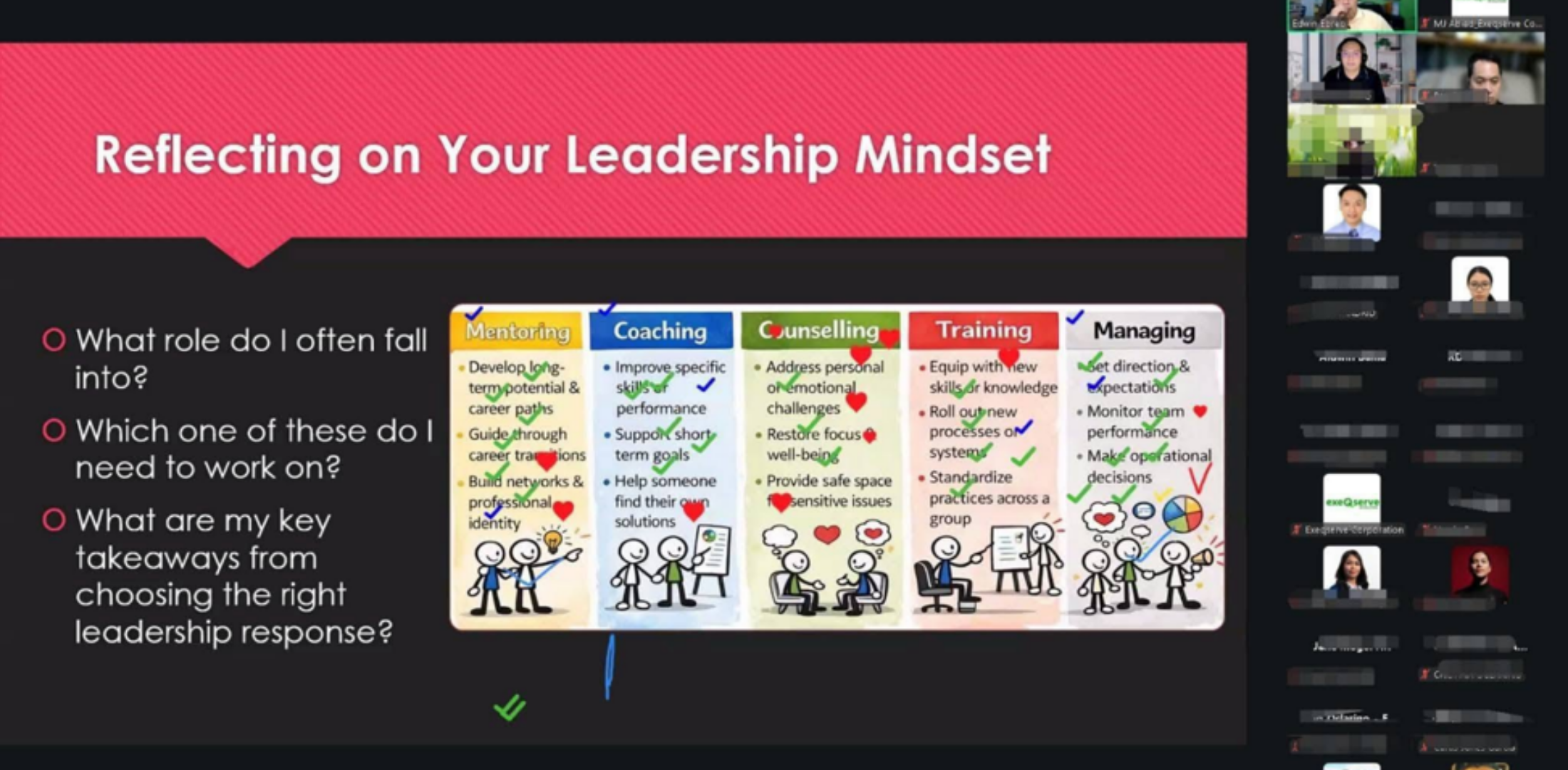
Another important takeaway was the need to choose the right leadership response for each situation. Employees do not always need the same kind of support. A team member who wants career guidance may benefit from mentoring, while someone who needs to improve performance may require coaching. A new employee may need training, an overwhelmed team member may need a supportive counselling conversation, and an employee who repeatedly misses expectations may require clear management and accountability. Knowing when to shift between these approaches helps leaders respond with greater purpose and effectiveness.
The workshop also highlighted the role of feedback and psychological safety in building trust across generations. Employees are more likely to speak up, admit mistakes, ask questions, and share ideas when feedback is timely, specific, respectful, and focused on improvement. Psychological safety, however, does not mean lowering expectations or avoiding difficult conversations. It means creating an environment where people can be honest, learn from mistakes, and take responsibility without fear of embarrassment or unfair judgment.
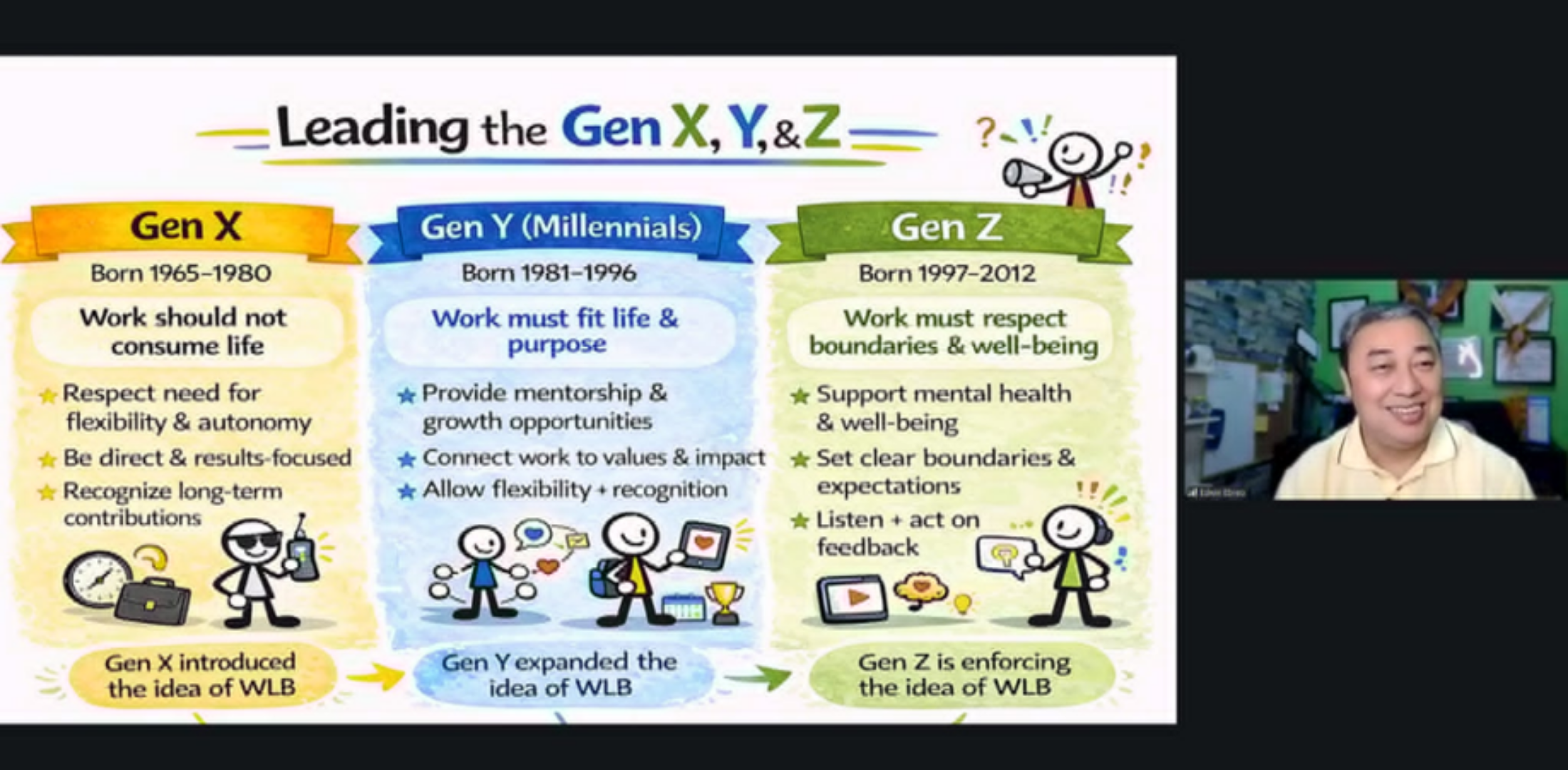
Leading a multigenerational workforce is not about choosing one generation’s preferences over another. It is about creating a workplace where different strengths, experiences, and perspectives can contribute toward shared goals. ExeQserve invites supervisors, managers, HR professionals, and emerging leaders to join our future workshops and gain practical tools for addressing real workplace challenges. Through purposeful learning and better leadership conversations, organizations can turn generational differences into opportunities for stronger engagement, resilience, collaboration, and performance.