
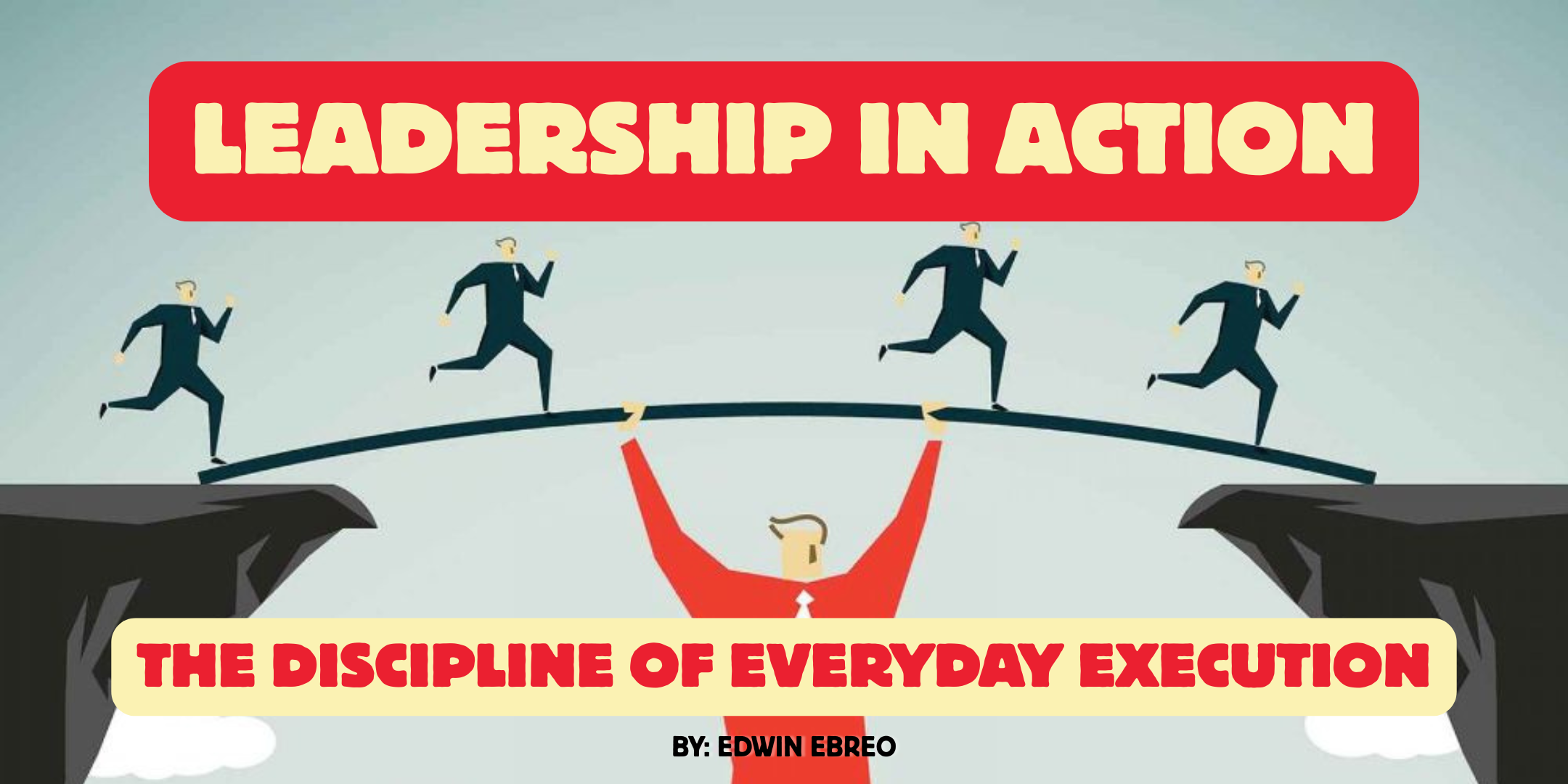
Leadership is often associated with vision, strategy, decision-making, and inspiring people during important moments. These are all important, but for supervisors and frontline leaders, leadership is tested most often in daily execution.
Daily execution is where plans become results.
It is where priorities are translated into work, where people decide what to do first, where commitments are either followed through or forgotten, where concerns are raised early or hidden until they become bigger problems, and where team morale is either strengthened or slowly weakened.
This is why everyday leadership matters.
Many workplace problems do not begin as major failures. They often begin as small execution gaps. A team member says “okay” even if the instruction is not fully clear. A shift turnover is done, but the unresolved issue is not properly explained. A deadline is missed because ownership was assumed but not confirmed. A recurring problem keeps coming back because the supervisor treats it as an attitude issue without checking whether the real barrier is process, skill, resource, or unclear authority.
Over time, these small gaps affect safety, quality, reliability, service, cost, coordination, and morale.
The work of the supervisor is to prevent these gaps from becoming normal.
This requires more than hard work. It requires leadership discipline.
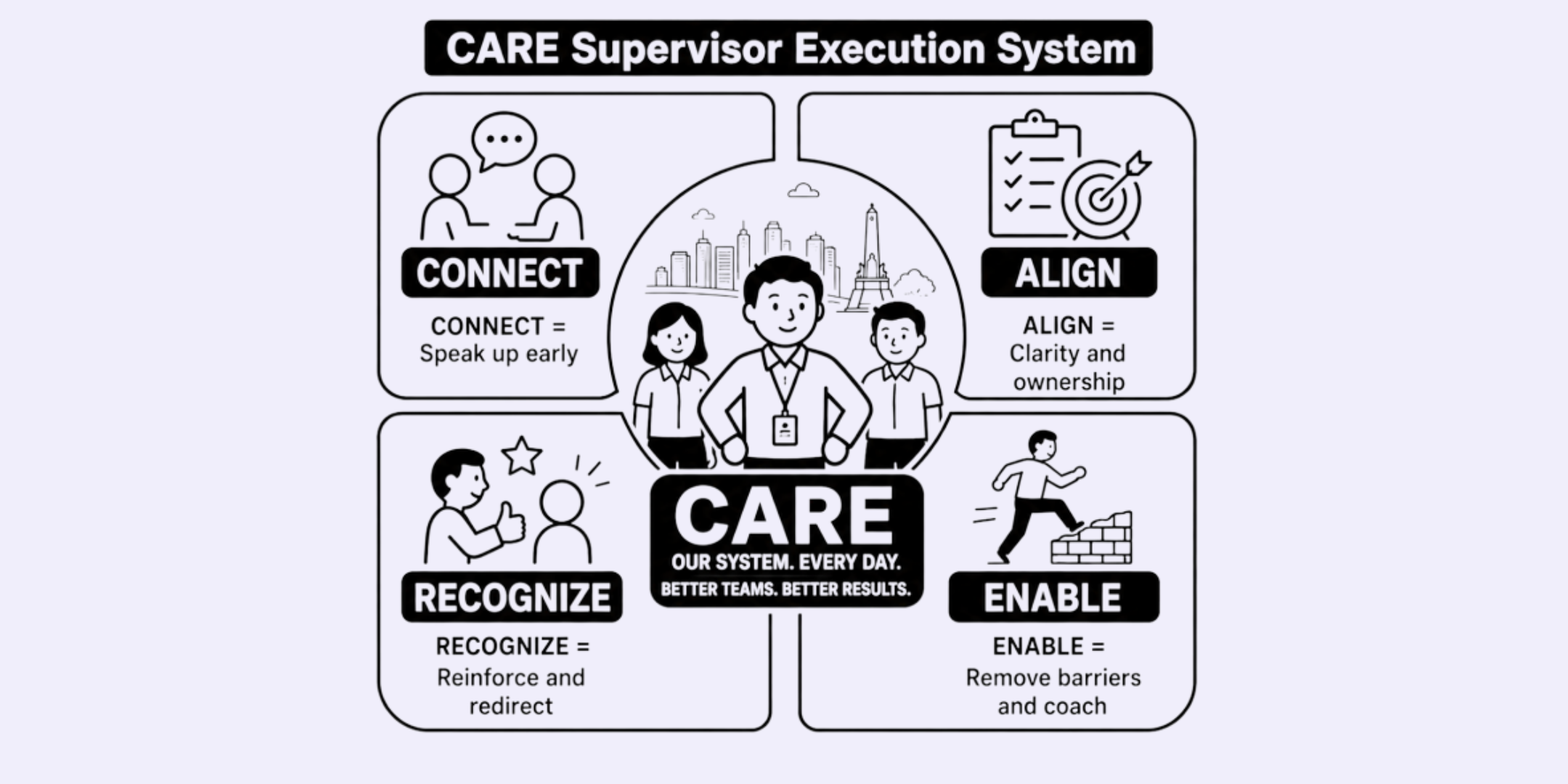
One practical way to understand this discipline is through the CARE Framework: CONNECT, ALIGN, RECOGNIZE, and ENABLE.

CONNECT is the discipline of building enough trust so that people speak up early. In many teams, people do not stay quiet because they do not care. They stay quiet because they are afraid of being blamed, embarrassed, ignored, or judged too quickly. A supervisor who practices CONNECT stays calm when bad news is raised, asks questions before judging, thanks people for raising concerns, and follows through on issues reported.
The behavioral indicators of CONNECT are visible. People ask questions when they are unsure. Concerns are raised before they become urgent. Near-misses, risks, and abnormalities are reported earlier. Team members are willing to say, “I need help,” “I am not sure,” or “There may be a problem here.”
ALIGN is the discipline of turning priorities into clear expectations. Many supervisors believe they have already given instructions when they say, “Ayusin natin ito,” “Tapusin natin today,” or “Make sure okay ang turnover.” But these statements can still leave people guessing.
Effective ALIGN behavior means the supervisor clarifies the output, standard, owner, deadline, watchouts, decision boundaries, and escalation rules. The supervisor does not assume that silence means understanding. They check if people know what good work looks like and what must be raised immediately.
The behavioral indicators of ALIGN are also visible. Team members know what matters most for the day or shift. They can explain their roles and commitments. Handoffs become clearer. There is less duplication, less waiting, less finger-pointing, and fewer avoidable delays caused by unclear ownership.

RECOGNIZE is the discipline of reinforcing useful behavior and correcting gaps respectfully. Supervisors may not always control rewards, incentives, or promotions, but they always influence what gets noticed. When useful behavior is ignored, people may feel that good work is invisible. When feedback is harsh or personal, people become defensive or discouraged.
Effective RECOGNIZE behavior means the supervisor names the useful behavior, explains why it matters, and encourages the person or team to repeat it. When correction is needed, the supervisor focuses on the situation, the behavior, and the impact instead of attacking the person.
The behavioral indicators of RECOGNIZE include more repeated useful behavior, clearer correction, less defensiveness during feedback conversations, and stronger ownership because people understand which behaviors help the team succeed.
ENABLE is the discipline of helping people perform better by removing barriers, coaching, and escalating the right issues. This is especially important because not every performance problem is an attitude problem. A repeated delay may be caused by a weak process. A missed standard may be caused by a skill gap. A slow response may be caused by missing information, lack of authority, or poor coordination with another unit.
A supervisor who practices ENABLE does not simply remind people to “do better.” The supervisor diagnoses the barrier first, then decides whether to remove, coach, or escalate. They avoid over-fixing because when supervisors solve everything themselves, the team becomes dependent and the supervisor becomes the bottleneck.
The behavioral indicators of ENABLE are clear. Recurring issues are discussed with evidence. Barriers are identified instead of guessed. Team members are coached to think and act with more ownership. Issues beyond the team’s authority are escalated properly, with facts and recommendations.

CARE leadership is not soft leadership. It is disciplined supervision.
It strengthens execution without destroying morale. It maintains standards without creating unnecessary fear. It helps supervisors balance two responsibilities: get the work done and help people perform better.
A supervisor practicing CARE leadership will show certain execution behaviors consistently:
- They clarify priorities before work begins.
- They check understanding instead of accepting vague agreement.
- They invite people to raise risks, concerns, and blockers early.
- They recognize useful behavior close to the work.
- They correct performance gaps respectfully and factually.
- They track commitments and follow through.
- They diagnose repeated issues before assuming the cause.
- They coach people instead of immediately taking over.
- They escalate the right issues at the right time.
- They review patterns, not just isolated incidents.
These are not dramatic leadership moments. They are daily leadership habits.
And that is the point. Strong execution is built through routines. A team becomes clearer, faster, safer, more accountable, and more willing to speak up when the supervisor practices the right leadership behaviors consistently.

Leadership in action is not proven by what a supervisor says during a meeting. It is proven by what the supervisor does every day to help the team execute better.
If you want your supervisors, team leaders, shift leaders, and frontline managers to strengthen these daily leadership practices, call us today and inquire about ExeQserve’s The Supervisor’s Daily Leadership Execution Toolkit Workshop.
A workshop that focuses on practical tools for applying C.A.R.E. leadership, strengthening daily execution, improving accountability, encouraging speak-up behavior, giving useful feedback, removing barriers, and building better follow-through routines.