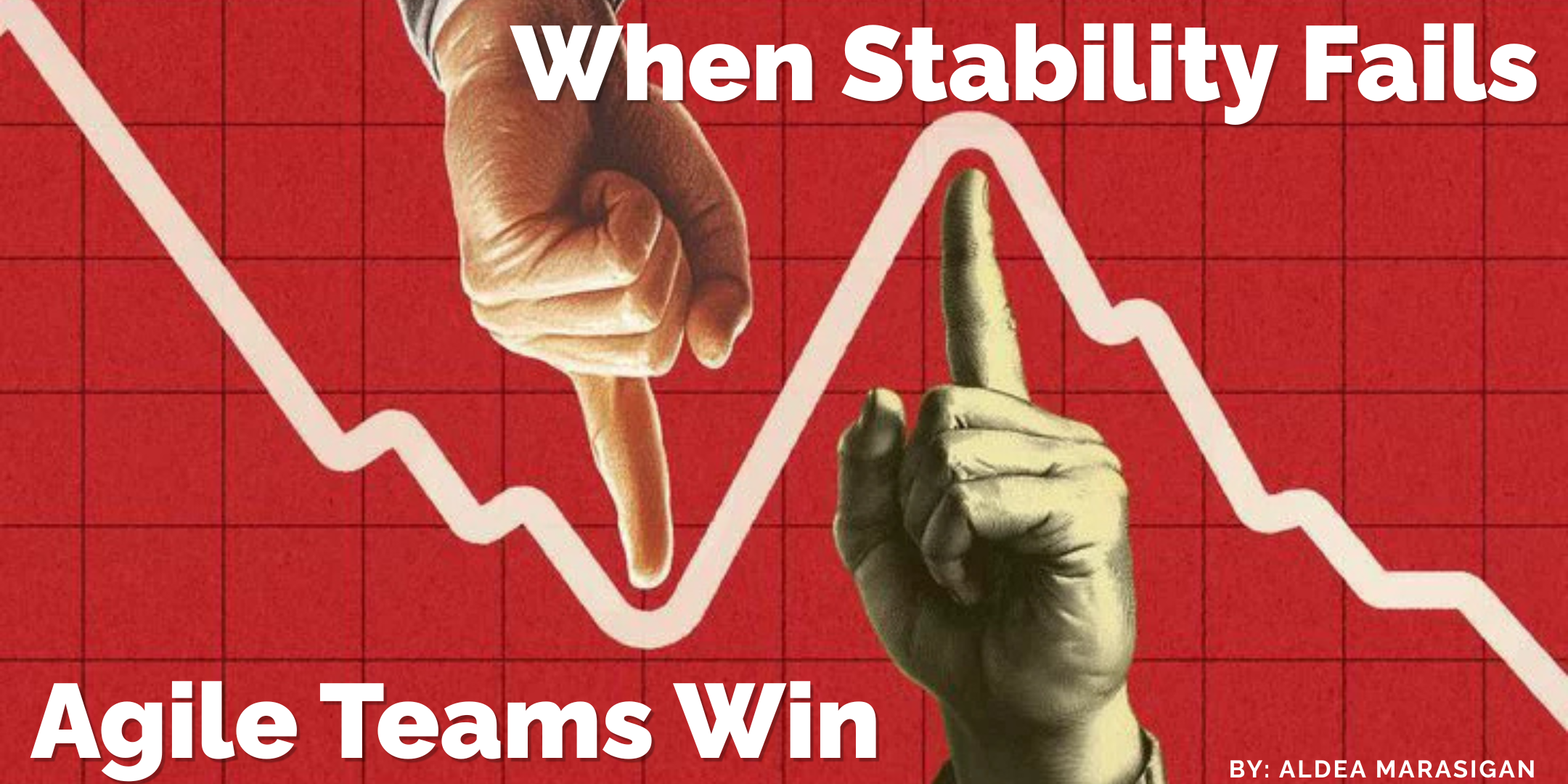
Recently, the world has been experiencing economic fluctuations, geopolitical tensions, and rapid technological shifts. But one thing is clear: stability is no longer the norm.
For businesses, the real competitive advantage isn’t just growth. It’s resilience. And, at the heart of resilience are teams that can adapt, pivot, and perform under pressure.
So how can leaders build teams that don’t just survive disruption but thrive in it?
What Does “Agility” Really Mean in Today’s Workforce?
Agility isn’t just about moving fast. It’s about moving smart in uncertain conditions.
Agile teams are:
-
Quick to adapt to change
-
Open to new ways of working
-
Empowered to make decisions
-
Continuously learning and improving
In times of crisis, rigid structures break. Agile teams bend without breaking.

The Reality: What Crises Are Doing to Teams
Global instability impacts the workforce in very real ways:
-
Increased stress and burnout
-
Fear around job security
-
Disrupted operations and shifting priorities
-
Communication breakdowns in hybrid setups
Without the right leadership approach, these challenges can quickly lead to disengagement and declining performance.
Practical Strategies to Build Resilient, Agile Teams
1. Prioritize Clear and Transparent Communication
Uncertainty fuels anxiety. Silence makes it worse.
Leaders must:
-
Share updates regularly—even when there’s no “perfect” answer
-
Be honest about challenges and plans
-
Create space for employees to ask questions
Clarity builds trust. Trust builds resilience.

2. Empower Decision-Making at Every Level
In fast-changing environments, bottlenecks can be costly.
Instead of centralized control:
-
Delegate authority to team members
-
Encourage initiative and problem-solving
-
Trust your people to act
Agile teams move faster because they don’t wait for permission.
3. Focus on Skills, Not Just Roles
Crisis often forces teams to wear multiple hats.
Shift your mindset from fixed roles to flexible capabilities:
-
Cross-train employees
-
Invest in upskilling (especially digital and problem-solving skills)
-
Encourage learning as part of the culture
The more versatile your team, the more resilient your business.

4. Strengthen Psychological Safety
During uncertain times, employees need to feel safe—not just physically, but mentally.
Create an environment where people can:
-
Speak up without fear
-
Share ideas and concerns openly
-
Admit mistakes and learn from them
Innovation and adaptability thrive in safe spaces—not fearful ones.
5. Reevaluate Goals and Expectations
What worked last quarter may no longer be realistic today.
Leaders should:
-
Regularly revisit goals and KPIs
-
Break large objectives into smaller, flexible milestones
-
Align team priorities with current realities
Agility means adjusting direction—not blindly sticking to outdated plans.
6. Take Care of Your People First
Resilient teams are built on supported individuals.
This means:
-
Recognizing signs of burnout
-
Encouraging work-life balance (or integration)
-
Providing mental health support where possible
A burned-out team cannot be an agile team.

The Leadership Shift: From Control to Adaptability
Crisis leadership is not about having all the answers.
It’s about:
-
Staying grounded amid uncertainty
-
Listening more than directing
-
Being willing to pivot quickly
The strongest leaders today are not the most rigid—they are the most responsive.
Global instability isn’t going away anytime soon. But neither is your opportunity to lead better because of it.
Resilient organizations are not built overnight—they are shaped by intentional leadership, empowered teams, and a culture that embraces change.
The question is no longer: “How do we avoid disruption?”
But rather: “How do we become stronger because of it?”