In my work as an organization development consultant and trainer, I regularly conduct programs on leading and managing Gen Zs. I hear many familiar concerns from leaders.
“They ask too many questions.”
“They want feedback all the time.”
“They leave too quickly.”
“They are harder to motivate.”
I understand the frustration. Leading younger professionals is not always easy. They communicate differently, ask for more clarity, and are more willing to question practices that older employees may have quietly accepted. But I think many leaders are missing the bigger lesson.
Gen Zs are not asking for a special kind of leadership. In many cases, they are making visible what good employees from all generations have needed all along: clarity, respect, feedback, fairness, growth, and meaningful work.

I belong to Generation X. When I was younger, I had the privilege of seeing different management styles up close. I saw managers who were clear, fair, and supportive. I also saw bosses who believed fear was a management tool, silence meant respect, and employees should simply endure whatever leadership style was thrown at them.
Back then, many of us treated a bad boss like bad weather. You did not like it, but you endured it.
You adjusted. You kept your head down. You learned how to read the room. You waited for things to get better. In manyFilipino workplaces, asking too many questions could be seen as disrespect. Challenging instructions could be interpreted as arrogance. Complaining about the boss was risky.
So, many employees learned to tolerate poor leadership. Some called it resilience. Sometimes, it was. But sometimes, what we called resilience was really endurance. We endured because we had fewer choices.
Today’s young professionals are entering a different workplace. They have more access to information. They can compare workplace experiences. They can build networks faster. They can explore opportunities more easily. They are also more aware of mental health, fairness, growth.

That is why old leadership lines are losing power.
“You should be thankful you have a job.”
“That’s how we suffered before.”
“Don’t ask too many questions.”
“Just follow.”
These lines may have worked when employees had fewer options. They are weak leadership strategies today.
Gen Zs do not just hope for good leaders. They expect good leadership.
That expectation can feel uncomfortable to some managers, but it can also be useful. It forces leaders to examine whether their leadership habits are still effective.
The truth is, Gen Z did not invent the need for good leadership. They did not invent the need for clear expectations, useful feedback, respectful correction, growth opportunities, and meaningful work. Employees from all generations need those things.

What Gen Zs have done is make these needs harder to ignore.
This is especially important in the Filipino workplace, where hierarchy, hiya, and pakikisama still shape how people behave. Some employees hesitate to speak up because they do not want to offend the boss. Some managers mistake silence for agreement. Some supervisors are promoted because they are technically good, senior, loyal, or dependable, but they are not properly prepared to coach, clarify expectations, give feedback, and handle generational differences.
Then Gen Z employees enter the workplace and ask: “Why are we doing this?” “How am I doing?” “What is the standard?” “Is there a better way?”
Some leaders hear these questions as disrespect. I think leaders should also hear them as data. These questions reveal where leadership needs to be clearer, more consistent, and more intentional.
So, what should leaders do?
First, stop stereotyping. Labels like “entitled”, “sensitive”, or “job hopper” may express frustration, but they do not improve leadership. Understand before judging.
Second, shift from command to clarity. Do not just say, “Basta gawin mo.” Explain what needs to be done, what good output looks like, why it matters, and when progress will be checked.
Third, give feedback earlier. Do not wait until frustration builds. Make feedback part of the normal rhythm of work.
Fourth, build trust-based influence. Authority may produce compliance, but trust produces commitment. Listen beforejudging. Correct respectfully. Follow through.
Fifth, turn delegation into development. Do not just assign work. Use work to build capability.
This does not mean lowering standards for Gen Zs. Young professionals must also learn patience, professionalism, accountability, and respect for experience. But leaders also need to grow. We cannot ask young professionals to mature while refusing to mature in the way we lead them.
Some leaders are not really complaining about Gen Z. They are complaining that old leadership shortcuts no longer work.And that may be a good thing.
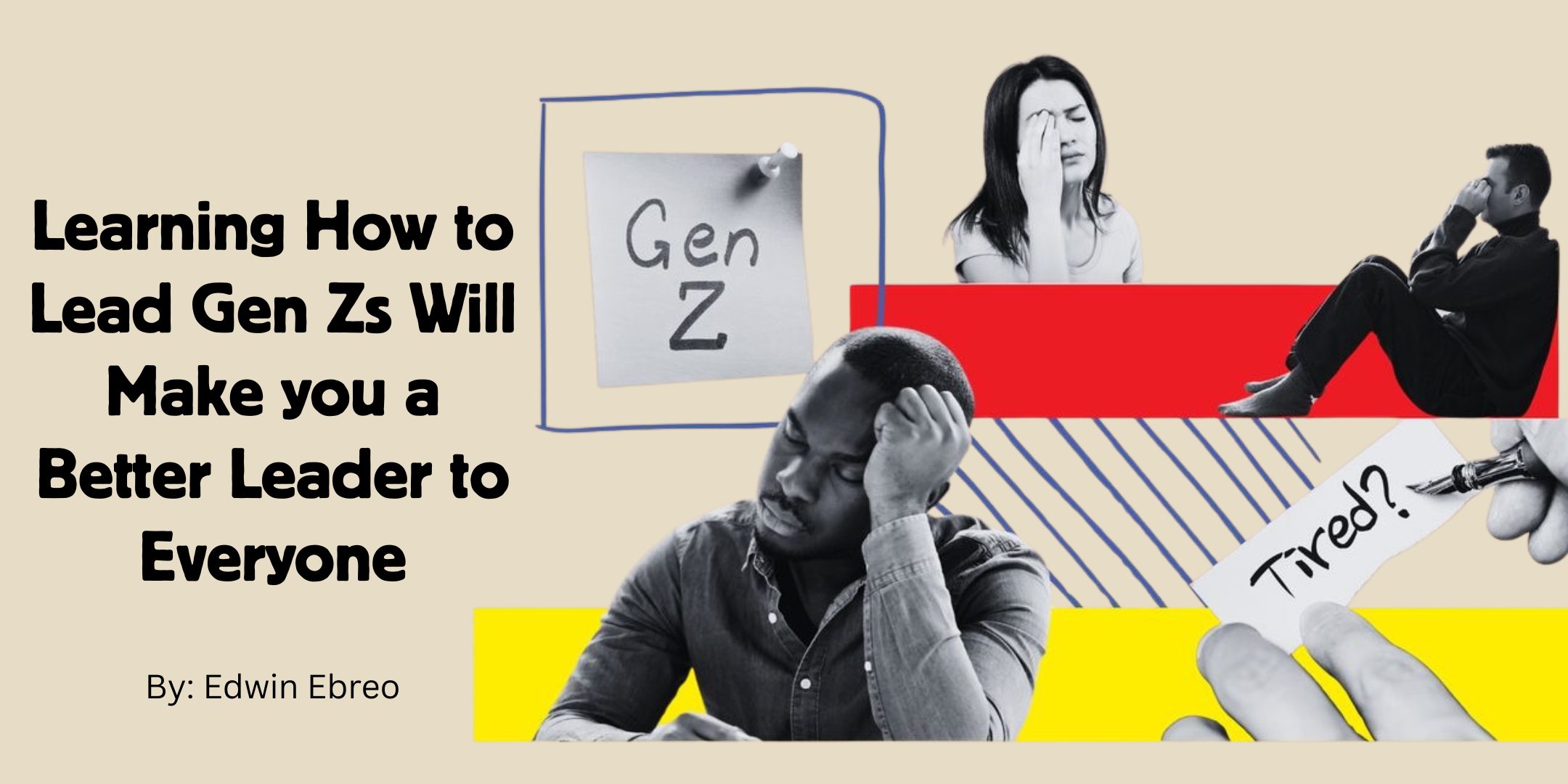
Because when we learn how to lead Gen Zs well, we do not just become better leaders for them. We become better leaders for everyone.